Are you still paying for cable TV when a better option might be waiting for you? The entertainment world has changed a lot. More people are switching to new technologies for better flexibility and savings.
Choosing between IPTV and cable TV affects how you watch TV for years. Each option has its own strengths for your living room. Knowing these differences helps you choose the right service for your lifestyle and budget.which is better in 2026?.
This guide covers everything you need to know about both services. You’ll learn which one offers better value, picture quality, and the content you want. By the end, you’ll know which choice is best for your household.
Key Takeaways
- IPTV delivers on-demand content and works on multiple devices, giving you freedom cable can’t match
- Cable TV excels at live sports and news broadcasting with reliable, stable service
- IPTV typically costs less per month than traditional cable packages
- Your internet quality directly affects IPTV performance, while cable needs no internet connection
- Streaming services are shifting consumer preferences away from traditional cable models
- 2026 brings new technology upgrades that favor IPTV expansion in most regions
- Your viewing habits and budget determine which service wins for your family
Understanding the Basics of IPTV and Cable TV
Before choosing a TV service for your home, it’s important to know what each offers. TV technology has changed a lot in the last ten years. Now, you have more choices than ever before. Let’s look at the two main options for 2026.
What is IPTV?
IPTV (Internet Protocol Television) uses the internet to stream TV channels and on-demand content. It doesn’t need physical cables. This method lets you watch TV on many devices, offering more flexibility than older systems.
Using IPTV is like streaming on Netflix or YouTube. Your internet provider sends the TV signal through your network. This way, you can watch your favorite shows whenever you want.
What is Cable TV?
Cable TV is the traditional service from companies like Comcast and AT&T. You pay a fixed monthly fee for a set of channels. This system has been around for decades.
Cable TV uses physical cables from poles to your home. These cables bring the TV signal to your box or TV. You get the same channels as your neighbors, based on your subscription.
| Feature | IPTV | Cable TV |
|---|---|---|
| Delivery Method | Internet connection | Physical cable infrastructure |
| Content Type | Live and on-demand | Primarily live broadcasts |
| Device Access | Multiple devices supported | Limited to TV or cable box |
| Setup Requirements | Broadband internet needed | Cable line connection required |
| Channel Selection | Customizable options | Fixed bundle packages |
| Payment Model | Flexible subscription tiers | Fixed monthly fee |
The main difference is how content gets to your screen. IPTV offers freedom and flexibility. Cable TV provides traditional reliability and established infrastructure.
Knowing these basics helps you decide which service fits your lifestyle. Your choice between IPTV and cable TV depends on your needs, budget, and preferences.
Key Features of IPTV
IPTV is changing how we watch TV. It uses the internet to deliver content, giving you control over what you watch. This new way of watching TV lets you watch what you want, when you want. IPTV has many features that make it better than old TV methods.
On-Demand Content
One big plus of IPTV is on-demand movies and series. You don’t have to watch TV at set times. IPTV offers Canadian channels, US networks, international TV, sports, and on-demand content.
Watch your favorite shows anytime. Pause and pick up where you left off. This lets you control your TV time, not the other way around.
Multi-Device Compatibility
IPTV isn’t just for your living room. It works on Smart TVs, Android boxes, Firestick, phones, tablets, and computers. This means you can watch anywhere, anytime.
Here are some viewing trends for 2026:
| Device Type | Projected Usage by 2026 |
|---|---|
| Smart TV Viewing | 55% |
| Mobile Devices | 35% |
| Tablet Viewing | 10% |
Watch your favorite shows on any device, anywhere.
Interactive Features
IPTV makes watching TV interactive. Services offer:
- Pause and rewind live events
- Interactive program guides
- Personalized recommendations
- Recording capabilities for later viewing
- Customizable channel lists
These features let you choose what, when, and how you watch. You’re not just watching TV—you’re in control.
Key Features of Cable TV
Cable TV has been a staple in American homes for decades. It brings entertainment directly to your living room. Cable TV uses coaxial cables to deliver signals, offering unique strengths that many viewers enjoy.
Live Broadcasting
Live broadcasting is a key feature of cable TV. You get real-time access to news, sports, and breaking stories. This is great for watching your favorite team play or staying updated on current events.
Cable networks offer live content all day. Channels like ESPN, CNN, and local news stations broadcast 24/7. This ensures you never miss important moments.
Bundled Packages
Cable providers often offer bundled packages. These combine TV, internet, and phone services. Bundles can seem like good deals, offering multiple services in one bill.
These packages usually include regional and national channels. Cable TV providers present these as complete solutions for your entertainment needs. You can’t pick individual channels without paying for the entire package.
- Hundreds of channels included in standard packages
- Discounted rates when bundling services together
- Single billing for multiple services
- Regional sports networks included in many packages
Limited Device Access
Cable TV is tied to a single TV and proprietary hardware. You need a cable box or DVR equipment from your provider to watch shows. This equipment connects directly to your TV.
Common limitations of cable TV include restrictions on where and how you watch. You can’t easily stream cable content to your phone, tablet, or laptop without special apps. This contrasts with IPTV services that work across multiple devices.
| Aspect | Cable TV Access | Typical Limitation |
|---|---|---|
| Primary Viewing Device | Television with cable box | Limited to TV connection |
| Mobile Viewing | Limited or unavailable | Requires special authentication |
| Multiple Room Access | Additional boxes required | Extra fees apply per room |
| Portable Streaming | Not standard | Restricted to home network |
Extra fees for sports or premium content add up quickly. If you want premium channels, you’ll pay extra each month. International content is often expensive or unavailable through standard cable packages. Long-term contracts lock you into pricing for extended periods, making it difficult to switch providers without penalties.
Cost Comparison: IPTV vs Cable TV
When choosing between IPTV and cable TV, think about your budget. The cost difference is a big reason people switch from cable to IPTV. Knowing what you’ll pay each month helps you choose wisely.
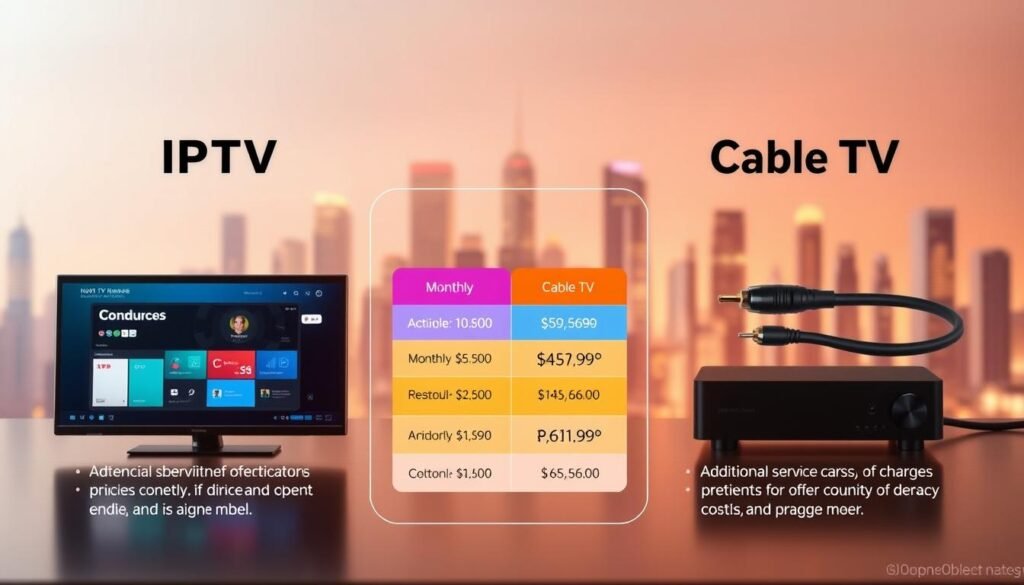
Cable TV bills start at $80–$120 a month. Adding extras like sports channels or HD quality raises the price. Don’t forget installation and equipment fees, which add to the cost.
Monthly Subscription Fees
IPTV costs less than cable TV. You get thousands of live TV channels in one package. This includes movies and series, offering more entertainment for less money.
Check out best IPTV providers for 2026 for current prices. IPTV services charge much less than cable for similar content.
| Service Type | Monthly Cost Range | Channels Included | Installation Fee | Equipment Cost |
|---|---|---|---|---|
| Cable TV | $80–$120+ | Limited (100–300) | $50–$150 | $10–$20/month |
| IPTV | $10–$25 | Thousands | No cost | No cost |
Hidden Costs and Fees
Cable companies often have hidden charges. You might pay extra for premium channels or sports packages. Equipment rental fees add up every month. Installation fees can be as high as $150.
IPTV has no hidden costs. You don’t need technicians or special equipment. There are no long-term contracts, so you can cancel anytime without penalties.
- Cable TV extra charges: sports packages ($15–$40/month)
- Cable TV extra charges: movie channels ($5–$25/month)
- Cable TV extra charges: HD quality upgrade ($5–$10/month)
- Cable TV extra charges: equipment rental ($10–$20/month)
- IPTV bundled services: live TV, movies, and series in one package
- IPTV advantage: no contracts or early cancellation fees
Cost is a big reason people switch to IPTV. IPTV users save a lot of money while getting more content. You could save $700–$1,200 a year by switching.
Availability: IPTV and Cable TV
Where you live affects your choice between IPTV and cable TV. Your location impacts what services you can get and how well they work. It’s key to know what’s available in your area before deciding.
Urban vs Rural Areas
In cities, you have many IPTV and cable TV options. More people live in urban areas, leading to more providers. Cities like Toronto, Vancouver, and Montreal offer a wide range of services.
Rural areas face different challenges. Getting good entertainment services has been hard for years. But, 5G networks are changing this by improving rural connectivity.
Here’s what you need to know about service availability:
- Urban zones get faster access to new technology
- Rural areas face infrastructure limitations with cable TV
- IPTV works better in remote regions with proper internet
- Cable TV requires physical line installations
Internet Infrastructure Requirements
IPTV needs a strong internet connection to stream smoothly. With 5G, more people in remote areas can access IPTV, closing the digital gap.
Cable TV, on the other hand, uses its own lines. This means it doesn’t compete with your internet, offering consistent performance.
| Service Type | Internet Need | Infrastructure | Rural Access |
|---|---|---|---|
| IPTV | High-speed broadband required | Relies on internet networks | Improving with 5G rollout |
| Cable TV | Not required | Dedicated cable lines | Limited in remote areas |
Rural areas are getting better internet access. This means more people in remote communities can enjoy IPTV. Your internet speed is crucial for IPTV. Cable TV doesn’t have these technical issues.
Quality of Service: IPTV vs Cable TV
Choosing between IPTV and cable TV means you care about picture and sound quality. You want your favorite shows and sports games to look sharp on your screen. Both options can give you great viewing experiences, but they work differently.
Understanding how each service handles video quality and reliability helps you decide what’s best for your home.
Picture and Sound Quality
Modern IPTV services offer HD and 4K streaming with little buffering, thanks to stable internet. They also have Electronic Program Guides (EPG) for easy content finding. Your picture quality depends on your internet speed.
With a strong connection, you’ll enjoy smooth playback without annoying freezes or pixelation.
Cable TV quality depends on local infrastructure and may not match IPTV’s flexibility across devices. Your cable box connects straight to your TV, ensuring consistent quality. But, you can’t easily watch on your phone or tablet like with IPTV.
By 2026, 4K and 8K streaming will be the new standard in Canada’s IPTV market. This offers viewers unparalleled viewing experiences. The transition to 4K and 8K streaming requires significant upgrades to existing infrastructure. This means IPTV is leading in picture quality technology.
Reliability and Stability
Cable TV has long been known for rock-solid reliability. Your service stays on even during bad weather in most cases. You don’t need to worry about buffering or connection drops on your living room TV.
While cable TV is traditionally known for stability, modern IPTV providers now offer high uptime, fast customer support, and regular service updates. This changes the game. You get the same dependable service you expect from cable, plus the flexibility to watch anywhere. Check IPTV vs Cable TV comparisons to see real performance numbers from your area.
Here’s what you should know about each service:
- IPTV: Works across smart TVs, tablets, phones, and computers with consistent quality
- Cable TV: Tied to your TV box but offers predictable, stable performance
- IPTV uptime: 99% or higher with 24/7 customer support teams
- Cable TV uptime: Strong but depends on your local infrastructure
| Feature | IPTV Quality | Cable TV Quality |
|---|---|---|
| Picture Resolution | HD, 4K, 8K capable | HD to standard definition |
| Buffering Risk | Low with stable internet | Minimal |
| Device Compatibility | Multiple devices | TV only |
| Customer Support Response | Fast, available 24/7 | Varies by provider |
| Service Updates | Regular and automatic | Periodic |
Your choice comes down to what matters most. Want top-tier picture quality on multiple devices? IPTV delivers. Value simplicity and stable performance on one TV? Cable TV works great. The best service depends on your viewing habits and internet quality.
Viewing Experience: User Interface
Choosing between IPTV and cable TV is more than just about what you watch. How you interact with your service is key. IPTV offers Electronic Program Guides (EPG) for easy navigation. Cable TV has traditional interfaces that many find easy to use.
Ease of Navigation
Finding your favorite shows should be easy and fast. IPTV has better navigation tools that meet your needs. Its EPG organizes channels and programs in a way that makes sense.
Cable TV has standard channel guides that work the same everywhere. You can flip through channels or use menus to find shows. It’s easy to use because most people grew up with it.
AI-driven personalization is changing IPTV. It learns what you watch and suggests new shows. This way, it gets to know your preferences and recommends content you might like.
Customization Options
Personalization makes IPTV different from cable TV. IPTV’s recommendation engines get better over time, suggesting shows based on what you like. You can also customize your channels and set up parental controls.
Cable TV lets you set favorites and use DVR. But it can’t compare to IPTV’s customization options. You can’t easily change your channel lineup or make personalized lists.
| Feature | IPTV | Cable TV |
|---|---|---|
| Electronic Program Guide (EPG) | Advanced with search filters | Basic channel listings |
| AI-Driven Recommendations | Yes, learns your preferences | No personalization |
| Custom Channel Organization | Full control available | Limited sorting options |
| Content Discovery Algorithms | Advanced suggestions daily | Manual browsing required |
| Mobile App Interface | Intuitive and feature-rich | Limited or unavailable |
IPTV lets you control your viewing experience. You can customize your content library and recommendations. Cable TV is simpler but less flexible.
- IPTV platforms update recommendations daily based on new watching patterns
- Cable TV interfaces remain consistent across all users
- IPTV allows voice search and smart home integration
- Cable TV relies on traditional remote control navigation
- IPTV saves your preferences across multiple devices
Your choice depends on what you value most. If you like discovering new content and want tech to help, IPTV is better. If you prefer simplicity and familiar layouts, cable TV is a good choice.
Content Library Size
Choosing between streaming options means looking at the content library size and variety. IPTV services offer thousands of live TV channels. This includes Canadian channels, US networks, international TV, and sports packages. Cable TV packages, by contrast, are limited to regional and national channels. International content is often expensive or not available.
IPTV gives you more viewing choices. The demand for niche content has grown. This means providers invest in international programming and exclusive offerings. This change shows how entertainment preferences have evolved.
Exclusive Channels and Shows
IPTV providers offer content that cable can’t match. They have international content partnerships and co-production agreements. This brings exclusive shows and channels you won’t find elsewhere. Local content production is also increasing, with more investment in Canadian programming.
Cable networks follow traditional broadcasting models. Your channel lineup is the same across your region. IPTV providers are focusing on international content partnerships. This allows them to offer global content licensing strategies that cable companies can’t match.
Sports and Live Events
Sports fans get a lot from IPTV. These services offer comprehensive sports packages. You get access to games, matches, and events from around the world.
- Live sporting events from major leagues
- International sports channels and networks
- On-demand replays and highlight compilations
- Niche sports programming
Cable TV limits your sports viewing to what your regional package includes. Premium sports channels cost extra. Accessing international sporting events is complicated and expensive.
Customer Support: IPTV vs Cable TV
Choosing between IPTV and cable TV means looking at customer support. Quick help can save you from hours of trouble. IPTV now offers fast support and regular updates, unlike traditional cable TV.
Availability of Support
Cable TV companies like Comcast and Charter offer phone support during the day. But, they’re not available on weekends. This can be frustrating, making fast support a big plus for new services.
IPTV providers have changed the game. They offer 24/7 support through live chat, email, and phone. This is great for help outside regular hours. Some even offer instant messaging that responds quickly.
- Phone support availability
- Live chat options
- Email response systems
- Mobile app support features
Response Times
Cable TV support takes 24 to 48 hours for emails. Phone lines can have long waits during busy times. Cable companies update services during set times.
IPTV providers are faster. They respond to chat requests in 5 to 15 minutes. Emails get answers in 2 to 4 hours. This is crucial when you miss your favorite shows.
| Support Method | IPTV Response Time | Cable TV Response Time |
|---|---|---|
| Live Chat | 5-15 minutes | 20-45 minutes |
| Email Support | 2-4 hours | 24-48 hours |
| Phone Support | 10-20 minutes wait | 15-45 minutes wait |
| 24/7 Availability | Yes | Limited |
“Good customer support can be the difference between staying with a service or switching to a competitor.”
Your choice should fit your lifestyle. IPTV’s 24/7 support is great for late-night viewers or travelers. Cable TV is better for daytime help and those who don’t mind waiting. Both services are working to keep customers happy.
Trends Impacting IPTV and Cable TV
The world of entertainment is changing fast. People like you are choosing how to watch their favorite shows and movies differently. This change shows why more people are moving from traditional cable to IPTV services in the U.S. Your viewing habits and preferences are shaping the future of TV.
Shift Towards Streaming Services
The trend of cutting the cord is getting stronger. Younger viewers are leading the way, attracted to IPTV’s flexibility and on-demand viewing. This change shows how people’s viewing habits are evolving.
More people are unhappy with traditional cable TV because of its high costs, limited channels, and long contracts. Better internet connections are key to this shift. With faster and more reliable internet, streaming is becoming smoother than ever.
- On-demand viewing fits your schedule
- Lower prices appeal to budget-conscious viewers
- No long-term contracts required
- Access content anywhere with internet connection
Consumer Preferences
Your preferences are driving what services succeed. There’s a growing demand for niche content, like international programming, which traditional cable rarely offers. You want options that fit your interests, not generic packages.
Modern viewers want flexibility over tradition. You prefer services that fit your lifestyle, not rigid schedules. This shift is pushing IPTV providers and cable companies to innovate and meet your changing entertainment needs.
The Future of IPTV and Cable TV
The world of entertainment is changing fast. Your viewing habits will change in just a few years. IPTV and cable TV are evolving to meet your needs.
Predictions for 2026
The IPTV market is expected to grow a lot over the next few years. You’ll have more streaming options. The number of IPTV subscribers is set to rise by 2026, with growth over 15% each year.
This growth is good for you. More subscribers mean better services. You’ll see new features, faster speeds, and more channels.
Cable TV will still be around, but it won’t grow as fast. Many people are switching to streaming. Cable companies are changing their business models to keep up.
Technological Advancements
Big tech changes are coming:
- The rollout of 5G networks is expected to significantly impact IPTV adoption, enabling seamless streaming experiences even on mobile devices
- By 2026, 4K and 8K streaming are expected to become the new standard, offering viewers unparalleled viewing experiences
- AI-driven personalization is becoming a cornerstone of IPTV services, with content discovery algorithms learning viewer preferences over time
5G networks will change mobile viewing. You’ll watch shows without buffering. Stream quality will improve a lot.
4K and 8K streaming will become normal. Your favorite shows will look incredibly sharp. This technology needs better internet speeds, but 5G makes that possible.
Smart algorithms will understand what you like. Your IPTV service will suggest shows you’ll enjoy. This saves you time searching.
| Technology | Impact on IPTV | Your Benefits |
|---|---|---|
| 5G Networks | Faster mobile streaming | Watch anywhere without delays |
| 4K and 8K Streaming | Higher video quality standard | Crystal clear picture on all devices |
| AI Personalization | Smart content recommendations | Find shows you love faster |
| Cloud Storage | Access content from anywhere | Watch your library on any screen |
These advances will make your entertainment better. Cable TV will struggle to keep up. IPTV services will lead in using new technology.
Making the Right Choice for Your Needs
Choosing between IPTV and cable TV depends on your viewing habits and budget. Your entertainment choices are unique. So, the best service depends on how you watch TV. Take time to honestly evaluate what works for your lifestyle before making a commitment.
Assessing Your Viewing Habits
Start by asking yourself critical questions about your viewing preferences. Do you watch live TV or prefer on-demand content? Are you a sports fanatic or do you watch series and movies on your own schedule?
Consider your device preferences too. Do you travel and want to watch on mobile devices, or do you mainly watch on your living room TV? How many people in your household watch TV, and do they have different preferences?
Think about content types that matter to you. Do you value international programming or niche content? By answering these questions honestly, you’ll gain clarity on which service aligns with your actual viewing patterns.
Budget Considerations
Your financial situation plays a major role in this decision. Calculate the total cost of ownership for each option, including monthly fees, equipment costs, and installation charges.
For people looking to reduce costs while expanding content access, IPTV clearly outperforms cable TV in price comparisons. Review potential savings from bundling or promotional offers with both services.
Consider whether you’re willing to pay more for cable’s traditional reliability or if IPTV’s lower cost and greater flexibility make it the obvious choice for your budget.
As internet speeds improve nationwide, IPTV is positioned to become the dominant television solution. Choosing a reliable IPTV provider is key to a smooth experience. The cheapest option isn’t always the best—look for providers with strong customer reviews and service guarantees.
| Cost Factor | IPTV | Cable TV |
|---|---|---|
| Monthly Subscription | $20-$50 | $60-$150 |
| Equipment Cost | $30-$100 | $0-$200 |
| Installation Fee | $0-$50 | $50-$150 |
| Annual Total (Average) | $300-$750 | $900-$2,000 |
By working through these considerations, you’ll develop a clear, personalized roadmap for making the decision that’s right for you.
Conclusion: Deciding Between IPTV and Cable TV
You’ve learned about IPTV and cable TV’s strengths and weaknesses. The TV world in 2026 is very different. IPTV is now a top choice for watching TV, offering more options and savings.
Factors to Weigh Before Choosing
Think about what’s important to you before deciding. Look at the cost first. What’s your monthly budget? Can you handle the yearly total? Then, check if the service has the content you want.
Consider your internet connection too. Do you have the speed for smooth streaming? Think about watching on different devices. And, do you need a service that’s always reliable?
IPTV is better for saving money and getting more content. Services like Hulu Live and YouTube TV offer great value. But, cable TV is still good for those who want simplicity and reliability.
Your Perfect Entertainment Solution
Choosing between IPTV and cable TV isn’t stressful. The right choice depends on your needs and habits. Some prefer cable TV’s reliability, while others like IPTV’s modern features and savings.
Now, you can make a confident choice. If you’re leaning towards IPTV, look for providers that fit your needs. If you prefer cable TV, check out local offers. You might even try IPTV with a short-term subscription.
The TV world offers more choices than ever. Taking your time to choose will save you money and improve your viewing experience. Your perfect entertainment solution is waiting for you. Start your search today and enjoy the show.