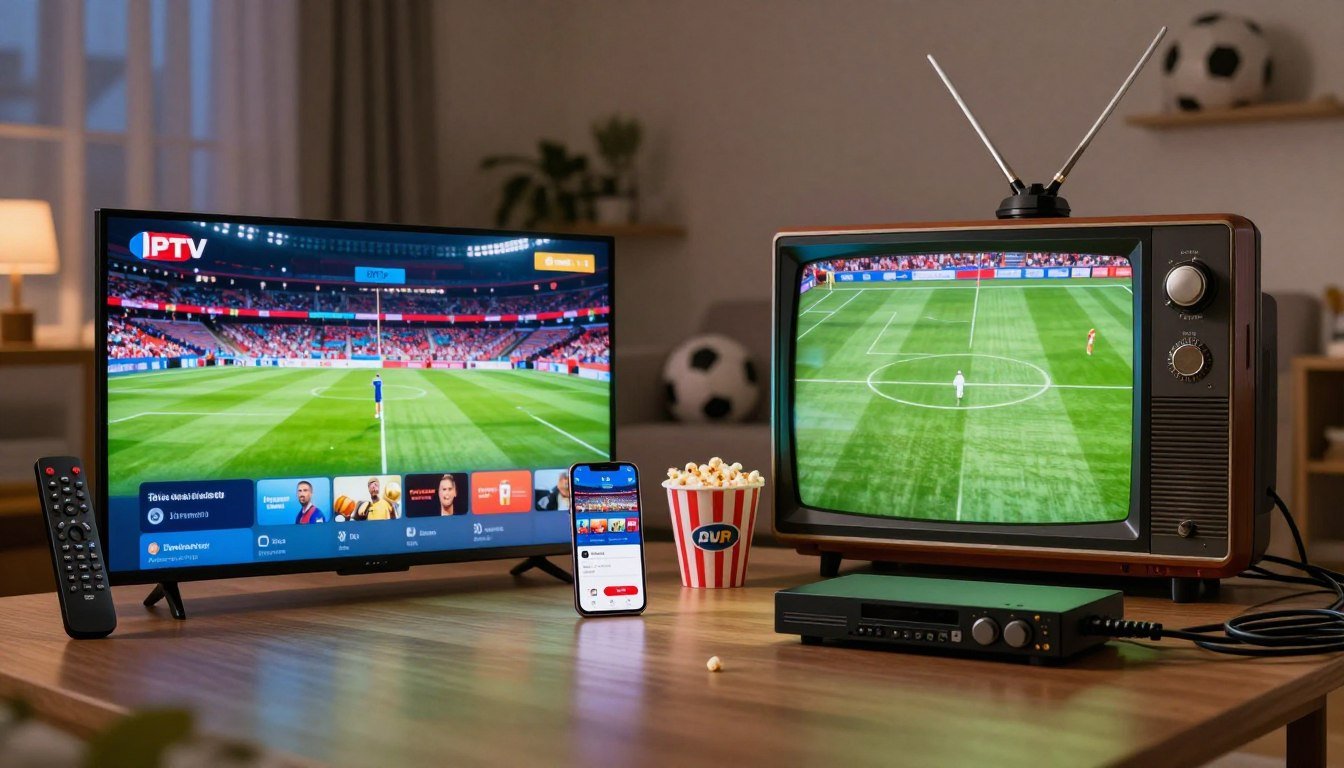
Imagine watching the World Cup 2026 and saving hundreds of dollars. Plus, you get better picture quality and more flexibility.
The FIFA World Cup 2026 is heading to North America. Matches will be played in the United States, Canada, and Mexico. Fans in America must decide how to watch this big event. Your choice between IPTV and cable will affect your viewing experience.IPTV vs Cable for World Cup 2026.
Watching TV has changed a lot. Many wonder if cable is still worth it with IPTV’s streaming options. The best way to watch the World Cup 2026 depends on your budget, location, and what you value most.
This guide compares IPTV and cable for the World Cup 2026 in detail. You’ll learn about costs, picture quality, channel options, and reliability. We’ll look at setup, device compatibility, and customer support from both services.
Where you live is important. Your internet speed, TV setup, and viewing habits matter. This article helps you understand what each option offers. So, you can choose the best for your household.
Key Takeaways
- IPTV often costs less than cable while offering comparable or better picture quality
- Cable requires professional installation, while IPTV can be set up quickly at home
- Your internet speed and location affect IPTV performance during World Cup matches
- Cable coverage varies by region, making IPTV more accessible in rural areas
- Both services offer sports channels, but broadcasting rights differ by location
- Month-to-month IPTV plans provide more flexibility than cable contracts
- Peak viewing times during World Cup games test the reliability of both services
Understanding IPTV and Cable Television
Before choosing how to watch the World Cup 2026, it’s key to know how IPTV and cable work. Both deliver TV to your home but in different ways. Your choice between streaming and cable will depend on these differences.
What is IPTV?
IPTV means Internet Protocol Television. It sends TV content through your internet. You can watch live channels, shows, and sports on devices with internet, like phones or smart TVs.
This makes IPTV great for watching the World Cup anywhere. You don’t have to be in one place or on one TV.
What is Cable TV?
Cable TV uses cables to bring channels to your home. These cables connect to a box that plugs into your TV. It’s a traditional method that’s been around for a long time.
With cable, you can only watch on one TV at home. It’s tied to your location and relies on your provider’s network.
Key Differences Between IPTV and Cable
When comparing IPTV and Cable for the World Cup 2026, there are key differences. You can find more details by comparing streaming vs cable World Cup to make a smart choice.
| Feature | IPTV | Cable TV |
|---|---|---|
| Delivery Method | Internet connection | Physical cables |
| Device Compatibility | Multiple devices (TV, mobile, laptop) | Single television set |
| Channel Access | 10,000+ global channels | Limited regional channels |
| Contract Terms | Flexible monthly options | Long-term contracts required |
| Viewing Location | Watch anywhere with internet | Home-based only |
| Content Library | 17,000+ movies and 10,000+ series | Regional content only |
IPTV uses the internet to offer global content. It lets you watch on many devices and pause, rewind, or watch on-demand. Cable, on the other hand, has fixed channels and is tied to your location.
- Internet-based delivery versus physical cable infrastructure
- Multi-device viewing compared to single television access
- Global channel selection against regional limitations
- Flexible contracts instead of long-term commitments
- On-demand content versus scheduled programming
Knowing these basics helps you decide which technology fits your World Cup 2026 viewing needs best.
Cost Comparison: IPTV vs. Cable
When planning your World Cup 2026 viewing, cost is key. Your budget will guide you between IPTV and cable TV. It’s important to understand the real cost of each service. Many overlook hidden fees that can add up later.
Subscription Costs for IPTV
IPTV offers flexible pricing for cord-cutters. Prices range from $10 to $25 monthly, with no long-term contracts. You can choose month-to-month or annual plans for savings.
For World Cup 2026 sports, IPTV bundles sports channels at good rates. You pay one price without extra fees. This makes IPTV easy to budget for sports.
Subscription Costs for Cable
Cable TV pricing is different. Basic plans start at $50 to $80 monthly. But, sports channels cost extra. To watch the World Cup, you’ll need a more expensive tier, $100 to $150+ monthly.
Cable requires long-term contracts, 12 to 24 months. This can be a problem if you only want sports for specific events. The trend is moving towards IPTV for its flexibility and lower cost.
Hidden Fees and Charges
Cable TV has surprise costs:
- Installation fees ($50 to $100)
- Set-top box rental ($10 to $20 monthly)
- Regional sports fees
- Broadcast TV surcharges
- Early termination penalties (often $100 to $500)
IPTV is clear about costs with no hidden fees. Your bill is what you agreed to pay. This is great for sports fans watching the World Cup on a budget.
| Cost Factor | IPTV | Cable |
|---|---|---|
| Monthly Subscription | $10 to $25 | $50 to $150+ |
| Installation Fee | None | $50 to $100 |
| Equipment Rental | None | $10 to $20 monthly |
| Contract Length | Month-to-Month | 12 to 24 months |
| Early Termination Fee | None | $100 to $500 |
| Sports Add-Ons | Included | $15 to $30 extra |
For World Cup 2026 planning, IPTV is the better value. It avoids long-term contracts and hidden fees. IPTV offers flexibility and clear pricing, making it the smart choice for cord-cutters.
Picture Quality: IPTV vs. Cable
When watching World Cup 2026, picture quality is key. You want to see every detail clearly. IPTV and cable offer different qualities based on your setup and internet.
Understanding picture quality helps you choose the best for your home. Your internet speed, provider technology, and location affect the quality you get.
Resolution and Streaming Quality
IPTV services for World Cup 2026 offer HD, Full HD, and 4K Ultra HD streams. They use technology that adjusts quality based on your internet. This ensures smooth streaming without buffering.
Premium IPTV uses HEVC technology for 4K content. This means you can watch in 4K without using too much bandwidth. You’ll see every detail of the game without speed issues.
Cable TV usually offers HD quality. Some providers have 4K for certain content, but it varies. Cable quality doesn’t depend on your internet.
Effects of Internet Speed on IPTV
Your internet speed affects IPTV quality. Different resolutions need different speeds for good playback.
- HD streaming needs minimum 5-10 Mbps for smooth playback
- Full HD requires 10-20 Mbps for buffer-free viewing
- 4K Ultra HD demands at least 25 Mbps for optimal performance
During World Cup matches, your internet provider’s capacity is crucial. Speed changes can impact quality. Test your speed before streaming to ensure you have enough bandwidth.
Cable Quality in Different Areas
Cable quality varies by location. Newer fiber-optic systems offer consistent quality. This makes cable reliable during big events like the World Cup.
In older urban and rural areas, quality might be lower. These places may not have modern upgrades. Your area’s infrastructure affects the quality you get.
| Service Type | HD Quality | Full HD Quality | 4K Quality | Peak Hour Reliability |
|---|---|---|---|---|
| IPTV Services | 5-10 Mbps | 10-20 Mbps | 25+ Mbps | Depends on Server Capacity |
| Cable Television | Consistent | Consistent | Limited Availability | Highly Reliable |
Choosing between IPTV and cable depends on your location, internet speed, and quality expectations for World Cup 2026.
Availability: Where Can You Access IPTV and Cable?
Your location affects your World Cup 2026 viewing options. Cable TV and IPTV services vary by location in the United States. Knowing these differences helps you choose the best service for the tournament.
Coverage Areas for Cable Providers
Cable TV availability depends on physical infrastructure. Major providers like Xfinity, Spectrum, and Cox operate in specific areas. Your address determines which cable companies serve your home.
Cable is strongest in cities and suburbs. These areas have well-developed networks. Rural areas often lack cable service. You can check provider websites for coverage maps by entering your address.
Availability of IPTV Services
IPTV services work anywhere with internet. You don’t need special cable lines. IPTV is accessible everywhere, from cities to rural areas.
This is a big advantage for many viewers. IPTV isn’t tied to specific service areas. You can watch the same streams anywhere with internet. Even when traveling, IPTV stays available with an internet connection.
Rural vs. Urban Access
Urban viewers have many choices. You likely have multiple cable providers and easy IPTV access. Your internet connection is usually fast and reliable.
Rural residents face challenges. Cable TV may not reach your area. Internet access can be limited. But, broadband options like DSL and satellite internet are expanding.
| Feature | Urban Areas | Rural Areas |
|---|---|---|
| Cable TV World Cup Coverage Availability | Multiple provider options | Limited or unavailable |
| IPTV Services for World Cup | Accessible with fast internet | Accessible with basic internet |
| Internet Speed | Generally 100+ Mbps | 25-50 Mbps common |
| Service Options | Cable and IPTV both viable | IPTV often the best choice |
Rural viewers with limited cable options should consider IPTV. As long as you have internet, you can stream World Cup matches. Even moderate connections support live sports streaming.
IPTV bridges the digital divide between rural and urban areas. Rural residents get World Cup coverage without waiting for cable. Urban dwellers have both cable and IPTV to choose from based on price and reliability.
Bundling Options for IPTV and Cable
Planning your World Cup 2026 streaming? Bundling services can change your viewing and wallet. Cable and IPTV providers bundle differently, each with unique benefits. Knowing these differences helps you choose the best for the tournament.
Bundled Services with Cable Providers
Cable companies offer “triple-play” bundles. These include TV, internet, and phone in one deal. They often have promotional rates that seem like a steal.
Here’s what you need to know about cable bundles:
- Promotional pricing lasts 12 months
- Monthly bills can jump by 40-60% after promotions end
- Most bundles require 1-2 year contracts
- Canceling services can lose discounts on others
If you need internet, adding TV might save money. But, check the costs after promotions end to understand the true cost for watching the World Cup and more.
IPTV Bundles: What’s Included?
IPTV bundles differently. Instead of combining services, IPTV providers offer all-in-one content packages.
- Thousands of live TV channels
- Large on-demand movie and series libraries
- International sports, including soccer
- Multi-device access at one price
IPTV providers offer tiered packages like basic, premium, and sports-focused. You pick the package that fits your World Cup streaming needs without extra costs.
Advantages of Bundling
Choosing between IPTV and Cable for the World Cup means considering bundling benefits. Cable bundles are good if you need multiple services and can commit long-term. They offer convenience.
IPTV’s all-in-one approach has its own perks:
- Keep your preferred internet provider
- No long-term contracts needed
- Access vast content without bundling hassle
- Cancel or change plans monthly
- Enjoy top World Cup coverage and flexibility
Cord-cutters find IPTV bundling great because it offers streaming freedom without losing content access. You control your services and enjoy World Cup streaming tailored to your needs.
User Experience: Interface and Navigation
Watching the World Cup 2026 is all about how easy it is to find games. Streaming vs cable World Cup coverage makes a big difference. Your choice affects how you access live matches and replays.
Channel Guides and On-Demand Options
Cable TV has familiar electronic program guides (EPGs). These guides show what’s on for up to 14 days. You can also set recordings to never miss a game.
IPTV services have EPGs too, but quality varies. Apps like TiviMate and IPTV Smarters Pro offer detailed guides. IPTV has a huge on-demand library with thousands of movies and series. Some even let you restart live events.
| Feature | Cable TV | IPTV |
|---|---|---|
| EPG Length | 7-14 days ahead | Varies by provider |
| On-Demand Library | Limited selection | Thousands of titles |
| DVR Recording | Built-in functionality | App-dependent |
| Catch-Up TV | Limited availability | Available on premium services |
Ease of Use: IPTV vs. Cable
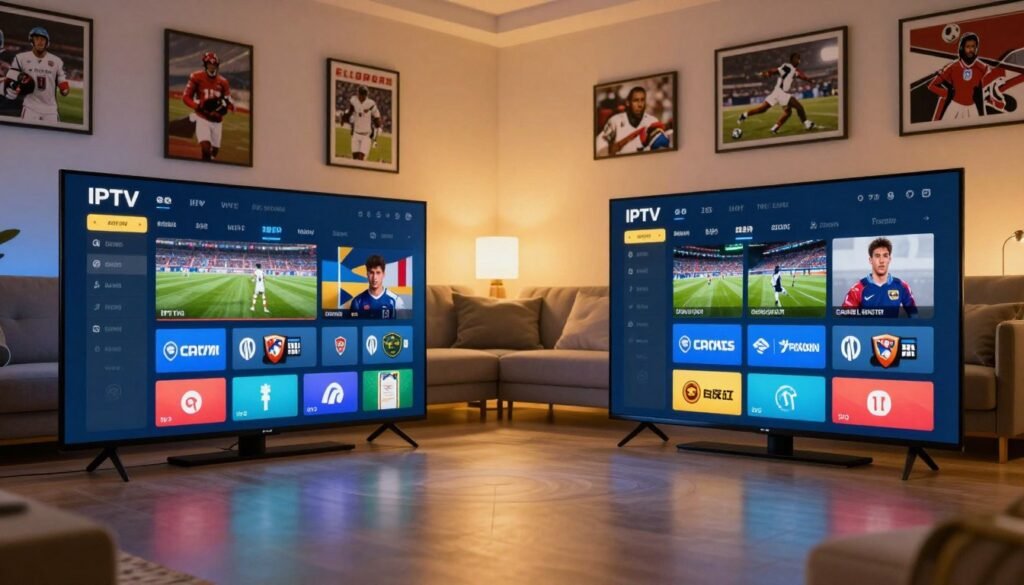
Cable interfaces are easy to use for most Americans. Your remote control works well with the set-top box. You don’t need to know much tech to use it.
IPTV interfaces vary by app. Apps like TiviMate and IPTV Smarters Pro are sleek and customizable. You need some tech knowledge to set them up, but they offer great customization options.
- Create favorite channel lists
- Customize your layout and design
- Set up parental controls easily
- Access streaming vs cable World Cup options quickly
Customer Support Experiences
Cable companies offer phone support, online chat, and technician visits. Your experience depends on your provider, and wait times can be long.
IPTV support varies. Good providers offer 24/7 ticket systems and quick help. Smaller providers might only offer email support. Check customer reviews before choosing your IPTV service, as you’ll need reliable help during the World Cup 2026.
“Your choice of service should include reliable customer support, not just affordable pricing.”
Channel Selection: What You Get
Choosing between IPTV and cable for the World Cup 2026 is important. Knowing what channels you’ll get is key. Cable TV gives you specific channels, while IPTV offers international options. Let’s look at what each service provides for sports fans.
Standard Channels Available on Cable
Cable providers offer a set of channels based on your plan. Basic packages include ABC, NBC, CBS, and FOX. You also get CNN, MSNBC, and networks like TNT, USA, and TBS.
Sports fans can find ESPN and ESPN2 in basic packages. Upgrades add FS1, FS2, and NBCSN for more sports. Cable offers 100 to 300 channels, depending on your plan and area.
Sports Channels on IPTV
IPTV services have thousands of channels, far more than cable. You get 10,000 to 15,000 global channels. This includes sports networks from around the world.
IPTV is great for soccer fans wanting global coverage. You can watch major European leagues and international tournaments. IPTV also offers pre-game and post-game analysis in many languages.
Exclusivity of World Cup Broadcasting Rights
FOX and Telemundo have the rights to broadcast the World Cup 2026 in the US. Cable TV shows these matches if you have the right package.
| Feature | Cable TV | IPTV |
|---|---|---|
| Total Channel Count | 100-300 channels | 10,000-15,000+ channels |
| Sports Channel Access | Regional sports networks only | International sports channels |
| Language Options | English mainly | Many language options |
| World Cup 2026 Broadcasting Rights Access | FOX and Telemundo official feeds | International feeds and official partners |
| Soccer League Coverage | US leagues mainly | Global leagues and tournaments |
Legitimate IPTV services work with official broadcasters for legal World Cup access. Make sure your IPTV provider is real and partners with official networks. This ensures you get legal coverage for the whole tournament.
Choosing between cable and IPTV changes your World Cup experience. Cable gives you official broadcasts. IPTV offers a global view and more sports, perfect for serious soccer fans.
Live Streaming Quality During the World Cup
When watching the World Cup, streaming quality is key. Nothing is worse than interruptions or quality drops ruining a match. Your choice between IPTV and cable TV affects your viewing experience.
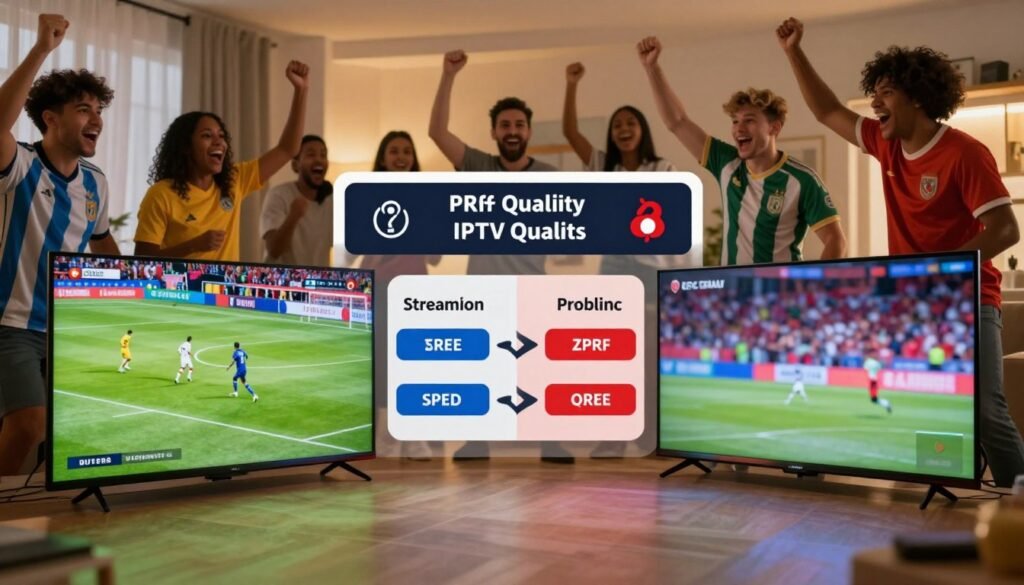
Buffering Issues: IPTV vs. Cable
Cable TV wins in buffering. Your signal goes straight to your box, avoiding drops. This is because it’s a wired system.
IPTV, on the other hand, streams over the internet. This means you might see buffering or pauses, even during big moments.
Premium IPTV uses special technology to fix this. It adjusts video quality to keep playback smooth, even with changing speeds.
Reliability During Peak Times
During World Cup games, cable TV shines. It handles lots of viewers without quality drops. This is because it’s built for it.
IPTV faces more challenges. It needs to handle sudden spikes in viewers. This is where quality really matters.
| Service Type | Peak Time Performance | Infrastructure Advantage | Uptime Guarantee |
|---|---|---|---|
| Premium IPTV | 99.9% Stable | Multiple server locations with load balancing | 99.9% uptime |
| Cable Television | Consistently Stable | Dedicated physical infrastructure | 99.8%+ uptime |
| Budget IPTV | Variable Quality | Limited server capacity | 95-98% uptime |
Budget IPTV might struggle during big events. Look for reviews that talk about performance during live sports.
Recommendations for Smooth Streaming
For the best World Cup experience, prepare your setup. Here’s how:
- Make sure your internet speed is good: 25+ Mbps for HD, 50+ Mbps for 4K
- Use Ethernet instead of Wi-Fi to avoid drops
- Close apps that use a lot of bandwidth during games
- Update your router if it’s old, as it can’t handle modern streaming
- Test your IPTV before the World Cup starts
- Check your cable package for World Cup channels early
Follow these steps to enjoy the World Cup without missing a moment.
Device Compatibility for IPTV and Cable
Choosing between IPTV and cable for World Cup 2026 streaming depends on your devices. IPTV is flexible with many devices, while cable is more traditional. Knowing these differences helps you choose the best service for your home.
Devices Needed for IPTV Access
IPTV works on almost any device with internet. It’s perfect for fans who want to watch anywhere. You can stream on:
- Smart TVs from Samsung, LG, and Sony
- Amazon Fire TV Stick and Roku devices
- Apple TV and Android TV boxes
- Smartphones and tablets (iOS and Android)
- Laptops and desktop computers
- Dedicated IPTV players and MAG boxes
Setting up IPTV is quick. Just download an app like IPTV Smarters Pro or TiviMate, enter your details, and start watching. You can watch a match on your TV, then on your tablet, and even on your phone.
Cable Setup Requirements
Cable TV is different. Your provider gives you a set-top box for your TV. A technician sets it up and checks the signal. Each TV needs its own box, and you pay rental fees of $5 to $15 monthly.
| Feature | IPTV | Cable |
|---|---|---|
| Mobile Viewing | Full support on phones and tablets | Limited through provider apps only |
| Setup Time | Minutes with app installation | Requires technician visit |
| Equipment Cost | No rental fees | $5-$15 per box monthly |
| Device Requirements | Any device with internet | Set-top box per television |
| Portability | Watch anywhere with internet | Fixed location viewing only |
Watching on Multiple Devices
IPTV lets you watch on many devices at once. Most plans allow two to five streams at the same time. This means family members can watch different matches without extra cost. Some providers offer unlimited devices, while others limit streams.
Cable needs separate boxes for each TV, which increases costs. Cable apps like Xfinity Stream or Spectrum TV app offer limited mobile viewing. These apps don’t work outside your network and limit streams.
IPTV offers better flexibility for watching World Cup 2026 streaming options across your household. Cable is simpler for traditional TVs but costs more for homes with many TVs and no mobile viewing freedom.
Setting Up Your Viewing Experience
Getting ready for World Cup 2026 means preparing your home entertainment system in advance. The setup process differs greatly between cable and IPTV services. Understanding what each option requires helps you decide which works best for your situation. When comparing IPTV vs Cable for World Cup 2026, installation time and complexity play important roles in your choice.
Cable installation typically demands scheduling appointments and waiting for technician availability. IPTV setup, on the other hand, you can complete yourself in minutes. Both approaches have distinct advantages depending on your comfort level with technology and available time before the tournament begins.
Installation Process for Cable TV
Cable installation starts with calling your provider and scheduling a technician visit. Wait times range from several days to weeks depending on where you live. When the technician arrives, they verify your home’s cable signal strength and run coaxial cables to your TV locations if needed.
Professional installation typically takes 1 to 3 hours. You’ll pay between $50 and $100 unless your provider waives the fee as part of a promotional offer. You must be home during the appointment window, which usually spans 2 to 4 hours.
Some cable companies offer self-installation kits shipped to your home. These save installation fees but require you to troubleshoot problems independently if issues arise. Many people prefer the technician option for peace of mind before streaming vs cable World Cup games.
Setting Up IPTV: Step-by-Step
IPTV setup is straightforward and you can finish it yourself in 15 to 30 minutes. Follow these simple steps:
- Ensure your device has a reliable internet connection
- Download a compatible IPTV app like TiviMate, IPTV Smarters Pro, or Perfect Player from your device’s app store
- Open the app and enter your subscription credentials (M3U URL or Xtream Codes login)
- Wait for your channel list to load, usually 30 seconds to 2 minutes
- Browse channels and add favorites for quick access to World Cup content
Most premium IPTV providers supply detailed setup guides with screenshots for popular devices. Some offer setup videos or customer support to help with initial configuration. No special technical knowledge is required—if you can download a smartphone app and enter login information, you can set up IPTV successfully.
Smart TVs and Streaming Devices
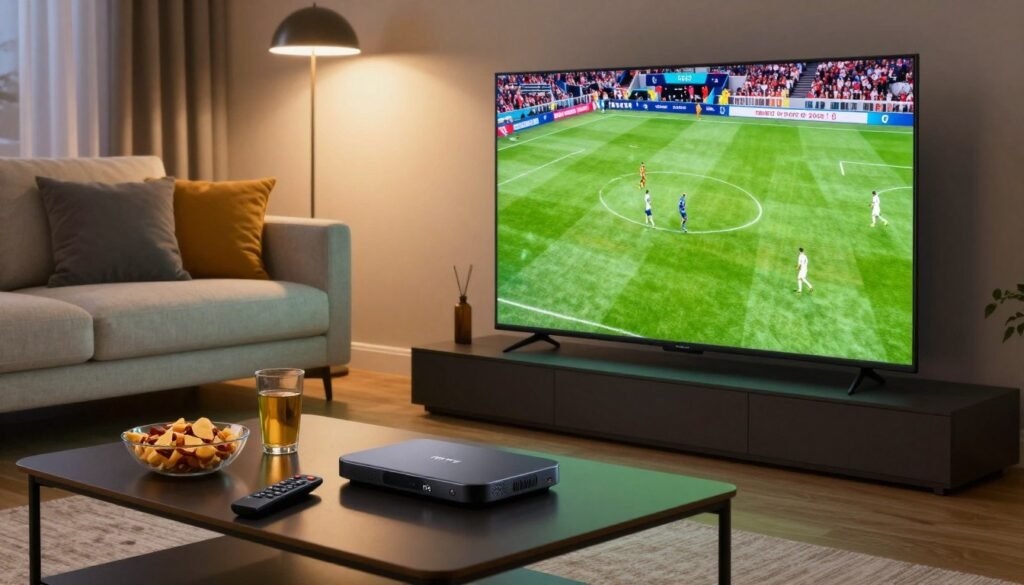
Modern smart TVs manufactured in the last 3 to 5 years likely run Android TV, webOS, or Tizen. These platforms have built-in app stores where you can directly install IPTV applications. This eliminates the need for extra hardware when choosing streaming vs cable World Cup viewing.
If your TV is older, affordable streaming devices solve this problem:
- Amazon Fire TV Stick ($30 to $50)
- Roku devices ($30 to $100)
- Android TV boxes ($40 to $80)
Amazon Fire TV Stick stands out as specially popular for IPTV. It runs Android, supports easy app installation, and costs very little. This makes it an excellent choice for dedicated World Cup 2026 streaming without expensive cable setup fees.
Smart TV and streaming device setup for IPTV requires no technician visits or installation charges. You control the timing entirely and can complete everything on your own schedule. This flexibility gives IPTV advantages when considering IPTV vs Cable for World Cup 2026, particular for viewers who want quick, affordable preparation.
Flexibility and Customization Options
When choosing between IPTV and cable for World Cup 2026, flexibility is key. You can customize your service and switch providers without penalties. Cable locks you into long-term agreements, while IPTV offers month-to-month freedom. Knowing these differences helps you choose the best for your sports viewing.
Personalized Viewing with IPTV
IPTV lets you control your viewing experience more than cable can. You can create custom channel lists for your favorite soccer and World Cup channels. IPTV apps also let you change the interface to fit your style.
Parental controls help protect family members by blocking adult content or specific channels. Many services support multiple languages for both the interface and content. This means you can watch World Cup matches in your preferred language. Advanced search features and catch-up TV let you find specific teams or matches easily.
Customization in Cable Packages
Cable providers offer tiered packages based on desired channels. But you can’t pick individual channels à la carte. This means you pay for many channels you never watch just to get the sports channels you need for World Cup coverage. Cable does offer some customization through DVR functionality, letting you record World Cup matches and create series recordings for tournament programming.
Making changes to your cable package requires calling customer service or visiting provider websites. Changes may not happen right away, unlike IPTV customization that happens instantly within your app. This slower process can be frustrating when you want to adjust your service quickly.
Switching Between Services
Cable television requires 12-24 month contracts with early termination fees of $200-$400 if you cancel before your agreement ends. This makes it hard to switch providers after the World Cup concludes if you subscribed mainly for the tournament. The IPTV cable comparison for sports shows that cable’s contract approach locks you into pricing that often increases substantially after promotional periods.
IPTV services operate on month-to-month subscriptions with no long-term contracts. You can subscribe for World Cup 2026, evaluate the service, and cancel anytime without penalties if it doesn’t meet your expectations. This flexibility makes IPTV ideal for cord-cutting viewers who want to try services without commitment or subscribe for major sporting events. When you watch 4K IPTV M3U content on your devices, you gain access to this level of personalization instantly.
| Feature | IPTV Services | Cable Television |
|---|---|---|
| Contract Length | Month-to-month, no long-term commitment | 12-24 months required |
| Early Termination Fees | None | $200-$400 |
| Channel Selection | Customize and pick channels individually | Tiered packages only, no à la carte |
| Parental Controls | Advanced customization available | Basic controls offered |
| Package Changes | Instant within app | Requires service call, delayed implementation |
| Multi-Language Support | Yes, for interface and content | Limited options |
| DVR Recording | Catch-up TV features available | DVR functionality included |
| Switching Providers | Simple cancellation, no equipment returns | Requires equipment returns and technician visits |
Switching between IPTV providers is simple compared to cable. You can cancel one subscription and sign up for another without equipment returns, technician visits, or termination fees. Some IPTV providers offer discounted annual subscriptions where you pay for 10-12 months and receive additional months free. This approach provides savings while maintaining flexibility that cable contracts simply cannot offer.
For cord-cutting World Cup 2026 enthusiasts, this flexibility represents tremendous value. You can subscribe for the tournament, enjoy premium sports content, and adjust or cancel your service without financial penalties. Cable’s rigid contract structure works against consumers who want temporary access to major sporting events or the ability to switch providers based on service quality.
Making the Final Decision
Choosing between IPTV and cable for World Cup 2026 depends on your personal situation. Think about your budget, comfort with technology, and internet speed. Your location also plays a role, as rural areas might have limited cable options but can access IPTV with any internet connection.
Consider which devices you want to use for watching. Ask yourself if you prefer lower monthly costs or if you value reliability above all else.
Factors to Consider for Your Situation
Your budget is the first thing to evaluate. IPTV typically costs less per month than cable service. You won’t face surprise fees or equipment charges. Cable requires contracts and often comes with hidden costs that add up over time.
Think about your comfort level with technology. IPTV uses apps and requires some troubleshooting skills. Cable offers professional installation and traditional remote controls that feel familiar to most people.
Your internet connection quality matters for IPTV. You need fast, reliable internet to stream World Cup matches without buffering. Cable works independently of your internet speed. Consider what devices you want to use. IPTV lets you watch on your phone, tablet, laptop, and smart TV. Cable mostly works on your television at home.
Your location affects your options too. If you live in an area with weak cable infrastructure, IPTV gives you access to matches with just an internet connection.
Long-Term Contracts vs. Month-to-Month
Cable companies lock you into contracts that last one or two years. The first year might seem affordable with promotional pricing. When the contract ends, your bill usually goes up significantly. You cannot leave without paying a penalty.
IPTV offers month-to-month flexibility. You can subscribe just for the World Cup tournament and cancel whenever you want. This approach lets you test IPTV during the biggest soccer event without any long-term commitment.
Month-to-month plans work well if you’re unsure about cutting the cable cord. You can try IPTV during World Cup 2026 and decide if you want to keep the service afterward. There are no penalties if you switch providers or want to change your mind. This flexibility costs you nothing.
Cable contracts remove your freedom to switch. You stay locked in even if you find better options or if service quality disappoints you during the tournament.
Your Ideal Viewing Experience for the World Cup
For World Cup 2026, you want reliable access to every match. You need high-quality streaming without buffering when crucial goals happen. The best way to watch World Cup 2026 depends on what matters most to you.
You might want to watch on different devices depending on where you are. International commentary and analysis enrich your experience during the tournament. IPTV and cable for World Cup 2026 both have strengths in different areas.
IPTV excels at flexibility, device compatibility, and international content. You can watch on your phone while at work or on your TV at home. You access soccer coverage from around the world. The cost stays low throughout the tournament.
Cable offers simplicity and strong reliability. You don’t depend on internet quality. The picture stays consistent regardless of network conditions. Pick IPTV if flexibility and cost savings matter most. Pick cable if you want maximum reliability and traditional viewing comfort.
Consider trying an IPTV free trial before the World Cup starts. This test run shows you real performance and helps you make the right choice for your viewing experience.