
Imagine watching your favorite shows anywhere without limits. A non-IP locked IPTV provider makes this possible. Unlike traditional cable, it lets you stream from different places without losing access.
Geo-blocking and access restrictions can be frustrating. When you travel, your streaming stops working. This is why many US viewers look for non-IP locked solutions.
More people want streaming that follows their lifestyle. They want to watch anywhere, anytime. Their entertainment shouldn’t change with their location.
A non-IP locked IPTV provider is different. Services like IPTV Canada with 15,000+ live channels and 60 show how streaming can meet your needs. You get thousands of channels and on-demand content, no matter where you are.
You can stream on multiple devices at once. Watch on your smart TV at home and on your phone while traveling. Connect your tablet in a coffee shop. One service handles it all, without complaints or denials.
Privacy is built into these services. Many providers include VPN protection. Your viewing stays private, no matter where you are in the country.
In this guide, you’ll learn how to find the right non-IP locked IPTV provider. You’ll see what makes these services special, how they work, and why they’re a smart choice for those who don’t want to be tied down.
Key Takeaways
- Non-IP locked IPTV providers let you stream from any location without access restrictions
- An unrestricted IPTV service works across multiple devices and locations simultaneously
- Privacy protection and VPN support come included with most quality providers
- Your subscription remains active whether you’re at home or traveling across the US
- Setup is quick with instant activation and seamless device compatibility
- Multiple streaming devices can run under one subscription without geographic limitations
- 24/7 customer support helps you troubleshoot any connection issues instantly
What is Non-IP Locked IPTV?
Non-IP locked IPTV is a new way to watch TV without being tied to one place. It’s different from old IPTV services that only work on one internet connection. With non-IP locked IPTV, you can watch your favorite shows anywhere, whether you’re at home, traveling, or switching networks.
This technology lets you choose a streaming service that fits your lifestyle. Knowing the difference between standard and non-IP locked options is key for flexibility and convenience in watching TV.
Definition and Basics
IP locking is a way some IPTV providers limit your service to one internet connection. If your service is IP locked, you can’t use it on a different network without help from customer support. This can be a problem for people who move a lot or travel abroad.
Non-IP locked IPTV works differently. It uses your login details, not your IP address. So, you can log in from anywhere in the world and start watching right away. You can use it on mobile data, public Wi-Fi, or your home network without any issues.
This is great for people who travel a lot or live in different places. Your subscription goes with you, without needing special setup or approval.
Key Features of Non-IP Locked IPTV
Non-IP locked IPTV offers many benefits that make streaming easier:
- Access from any internet connection without contacting support
- Seamless streaming across different networks and locations
- Compatibility with VPN services that mask your IP address
- Multi-device support across your home, office, and travel locations
- No waiting periods for IP address updates or reconfigurations
- Uninterrupted service when switching internet providers
- Freedom to use the service on mobile devices with changing IP addresses
Your flexible IP address IPTV subscription works instantly on new networks. You won’t get locked out just because you changed locations or internet providers. This technology makes watching TV more convenient by removing unnecessary barriers.
| Feature | IP Locked IPTV | Non-IP Locked IPTV |
|---|---|---|
| Login from Different Networks | Requires Support Contact | Instant Access |
| Travel Flexibility | Limited | Unrestricted |
| Mobile Device Streaming | Restricted | Fully Supported |
| VPN Compatibility | Often Blocked | Fully Compatible |
| Network Changes | Manual Updates Needed | Automatic Recognition |
| Setup Time for New Locations | 24-72 Hours | Immediate |
| No IP Restriction Streaming | Not Available | Standard Feature |
The authentication system behind non-IP locked IPTV uses your username and password, not your location. This makes it truly portable. Your service recognizes you, no matter where you are or what IP address you’re using.
Privacy is also a key part of this technology. Many non-IP locked IPTV providers offer built-in VPN support. This keeps your streaming activity private, no matter where you are in the world.
Benefits of Choosing Non-IP Locked IPTV
Non-IP locked IPTV services offer real advantages that change how you watch television. You get freedom that traditional cable and satellite providers simply cannot match. These services let you enjoy your content wherever you are, whenever you want. Let’s explore the main benefits that make this technology so appealing for US viewers.
Flexibility in Viewing
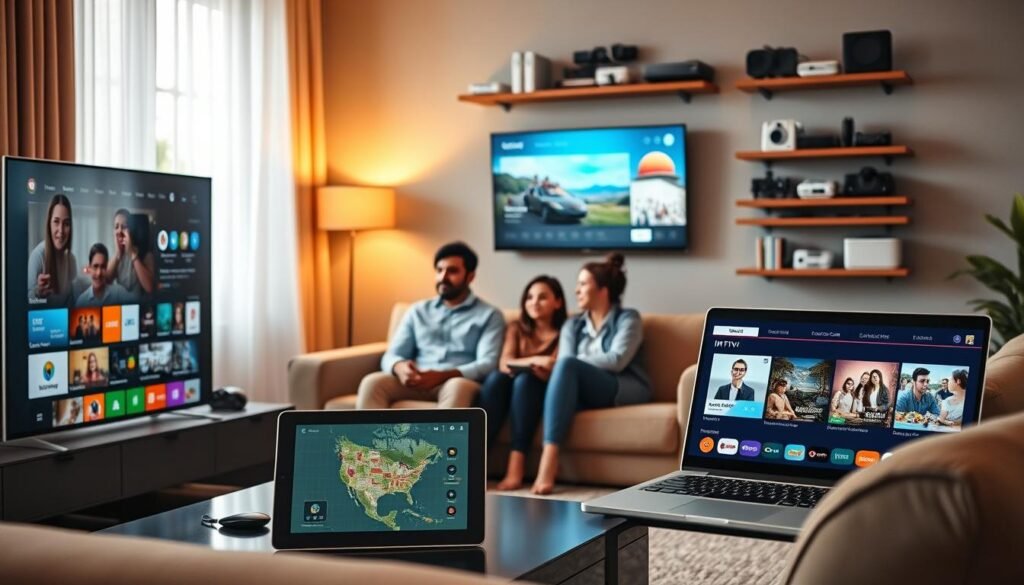
Imagine starting your favorite show on your living room TV, then continuing on your tablet during your lunch break, and finishing on your laptop at a coffee shop. Multi-location IPTV streaming makes this possible without any technical barriers. You can switch between devices instantly without losing your place.
This flexibility works great for families with multiple properties or students living away from home. You’re no longer stuck watching content only where your internet router sits. Your entertainment adapts to your lifestyle.
Access from Anywhere
A travel-friendly IPTV service becomes invaluable when you’re on the move. Business travelers can catch their favorite sports games from hotel rooms. Digital nomads working from different cities stay connected to their home content. RV enthusiasts who travel between campgrounds never miss their shows.
Your portable IPTV subscription travels with you in your pocket. Any device with internet access becomes your entertainment hub:
- Hotel rooms while traveling for business
- Airport lounges during layovers
- Vacation rentals and beach houses
- International locations while visiting family
- Coffee shops and shared workspaces
Avoiding Geographical Restrictions
Non-IP locked services eliminate frustrating geo-blocks that prevent access based on your location. You won’t need to contact customer support each time you change internet providers or move to a new area. Services like USA LIVE IPTV allow smooth location switching without service interruptions.
These services work seamlessly with VPN technology if you want extra privacy. You get the content you want without geographic hassles, making your viewing experience smooth and uninterrupted.
How Non-IP Locked IPTV Works
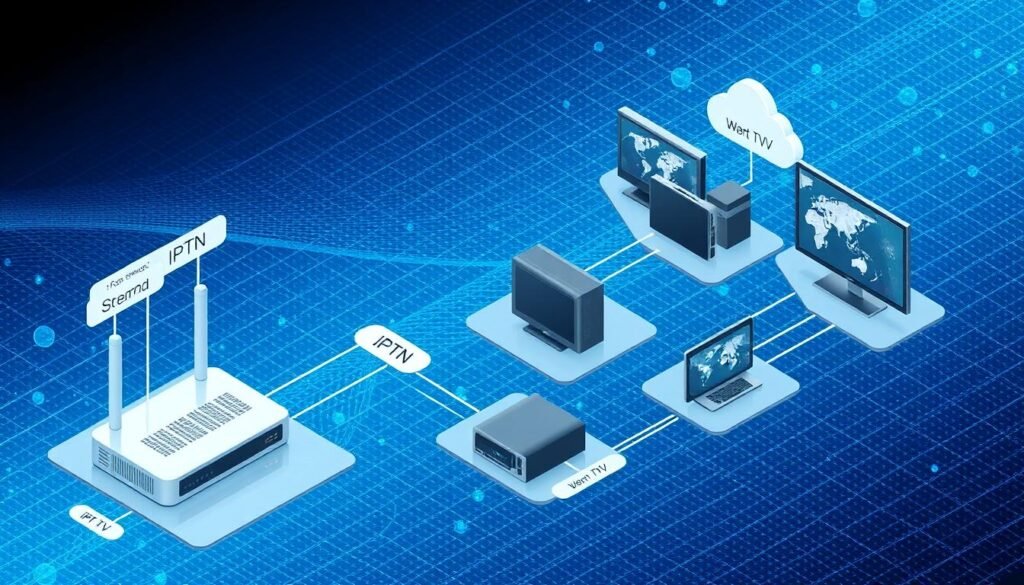
Non-IP locked IPTV is a technology that gives you freedom. It uses the internet to send content to your devices. This is different from cable or satellite services.
It works with smart systems and streaming tech. These systems make sure you can watch without any problems, no matter where you are.
Technology Behind Streaming
Non-IP locked IPTV uses your login info, not your location. This means you can watch from anywhere without losing service. It’s because the service doesn’t lock your account to one IP address.
Here’s how it works for you:
- Content is encoded at the provider’s servers
- Data travels through CDNs all over the world
- Your device decodes the stream live
- Streaming adjusts video quality based on your internet speed
Watching TV without limits is possible because providers have servers everywhere. When you pick a channel, it connects you to the best server. This way, you get smooth streaming without buffering. Using a VPN adds extra privacy without breaking the service.
Compatibility with Devices
Your non-IP locked IPTV works on all your devices. Smart TVs from Samsung, LG, and Sony can stream IPTV. Fire TV Sticks, Roku boxes, and Apple TV units also work the same way.
| Device Type | Compatibility | Setup Method |
|---|---|---|
| Smart TVs | Native apps or M3U playlists | Download app from store |
| Amazon Fire Stick | IPTV Smarters Pro, custom apps | Install from Appstore |
| Smartphones (iOS/Android) | Dedicated IPTV apps | App store installation |
| Windows/Mac Computers | Web players, dedicated software | Download desktop application |
| Android TV Boxes | Multiple IPTV applications | Sideload or app store |
| Tablets | Responsive web apps | App installation |
Apps like TiviMate and IPTV Smarters Pro make it easy to manage your channels. M3U playlists let advanced users customize their viewing. This means you can watch your favorite shows on any device you choose.
Popular Non-IP Locked IPTV Providers
Finding the right Non-IP Locked IPTV Provider can be tough with so many choices. Luckily, some top services stand out for their reliability and variety. Knowing what each provider offers helps you choose wisely, fitting your viewing habits and budget.
Overview of Top Providers
When looking for a Non-IP Locked IPTV Provider, focus on services that keep their promises. USA LIVE IPTV is great because it has no IP restrictions. This means you can watch your favorite shows anywhere, on any device, without location issues.
Nomad IPTV has over 15,000 live channels and includes VPN protection at no extra cost. It’s perfect for US and Canadian viewers who want both content access and privacy.
DigitaLizard IPTV offers 12,000+ live channels, 80,000+ on-demand titles, and a 99.9% uptime guarantee. It also has anti-freeze technology to keep streams smooth, even during busy times.
OTTOcean provides a user-friendly experience with 20,000+ channels and anti-freeze technology. It’s great for beginners because it’s easy to start using.
CatchON TV offers global content, including the USA, Canada, Africa, India, and South America. It also has a 3-day free trial, so you can test it before committing.
Features to Compare
Each Non-IP Locked IPTV Provider has its own strengths. Here are the key things to consider:
| Provider Name | Live Channels | VOD Content | Trial Period | Key Feature |
|---|---|---|---|---|
| USA LIVE IPTV | 20,000+ | Extensive | Check availability | No IP restrictions |
| Nomad IPTV | 15,000+ | Included | 36-hour paid trial | Built-in VPN included |
| DigitaLizard IPTV | 12,000+ | 80,000+ | Check availability | 99.9% uptime guarantee |
| OTTOcean | 20,000+ | Included | 1-day trial | User-friendly interface |
| CatchON TV | 7,000+ | Included | 3-day trial | Global content coverage |
| Kemo IPTV | 20,000+ | Included | 24-hour trial | Multi-device streaming |
When choosing, consider these important factors:
- Channel count and content library – More channels offer better variety for your household
- Video quality support – Look for HD, 4K, or 8K for better TV quality
- Trial availability – Test the service before spending money on a subscription
- Built-in features – VPN protection, anti-freeze technology, and catch-up TV add real value
- Device compatibility – Ensure it works on phones, tablets, smart TVs, and streaming boxes
- Customer support – 24/7 assistance beats limited hours when problems arise
- Simultaneous connections – Families need multiple users streaming at once
Your ideal Non-IP Locked IPTV Provider depends on your priorities. Whether it’s channel selection, streaming quality, or ease of use, try a trial period to see it in action before deciding.
How to Choose Your Non-IP Locked IPTV Provider
Finding the right IPTV service requires careful thought. You must know what you want before signing up. This guide will help you understand what makes a good provider stand out. You’ll learn how to spot genuine customer feedback from marketing tricks.
Factors to Consider
First, think about what you like to watch. Do you love sports or movies and TV shows? Your preferences will guide you to the best service. Sports fans need providers with good coverage of major leagues. Movie buffs should look for services with large libraries and new titles.
Next, check your internet speed and devices. Most IPTV services need 10-16 Mbps for HD streaming. If you have a 4K TV, choose a provider with 4K content and 25+ Mbps speeds. Make sure the service works on all your devices.
Also, consider how many people can stream at once. Some providers allow only one connection, while others offer three to five streams. This is important if your family wants to watch different shows at the same time.
| Key Evaluation Criteria | Why It Matters | What to Look For |
|---|---|---|
| Streaming Stability and Uptime | Ensures smooth viewing without interruptions | 99%+ uptime during peak hours |
| Video Quality Options | Matches your TV and internet capability | SD, HD, Full HD, 4K, or 8K support |
| Content Availability | Gives you access to shows you actually watch | Live TV, sports, and VOD libraries |
| Device Compatibility | Works on your existing equipment | Smart TVs, phones, tablets, computers |
| Trial Period | Lets you test before committing money | 24-hour to 3-day free trial available |
| Pricing Transparency | Helps you avoid hidden fees and surprises | Clear breakdown of all costs |
| Customer Support | Gets you help when problems arise | 24/7 live chat or email support |
Pricing is also key. Compare monthly rates to longer plans. Annual subscriptions can save 40-50% compared to month-to-month. Always check for trial periods. A 24-hour to 3-day free trial lets you test the service before paying.
Customer support quality is crucial. Look for 24/7 live chat support, important during big sporting events.
Reading Reviews and Testimonials
Not all reviews are equal. The best feedback comes from thorough testers. Look for specific testing conditions. Real reviewers talk about peak-hour performance, as services often work better at night but struggle during big games.
Check if reviewers mention the non-IP locked feature. Did it work when they traveled or switched networks? This direct experience is more valuable than generic praise.
- Search for detailed reviews mentioning specific testing methods and conditions
- Notice patterns across multiple independent reviews rather than trusting single opinions
- Watch for mentions of how quickly customer support solved problems
- Skip overly positive reviews with zero criticisms—these often come from paid testimonials
- Look for honest discussions of both strengths and weaknesses
- Check whether reviewers actually tested the service on their own devices
- Read comments from users discussing real-world performance during live events
Be wary of reviews that seem too perfect. Real customers always mention some downsides. Strong reviews acknowledge both what works well and what could improve. When many people mention the same point, that’s reliable feedback you can trust. This balanced view helps you pick a service that truly meets your needs, not just marketing claims.
Setting Up Non-IP Locked IPTV
Setting up your unlimited device location IPTV service is easy. Most providers activate it instantly, so you can start watching in just 5 minutes after payment. This guide will help you get started quickly, whether you’re tech-savvy or new to streaming.
Step-by-Step Setup Guide
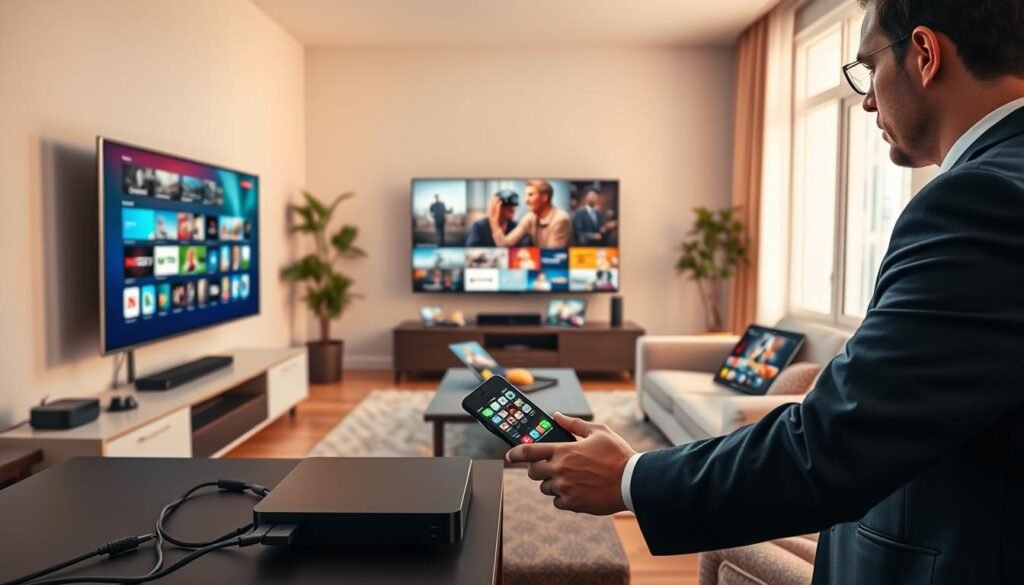
It all starts when you pick your subscription plan. After you buy, you get a confirmation email with your login details. This email unlocks access to IPTV content from anywhere.
Next, pick your device. You can use Amazon Fire TV Stick, Smart TVs, smartphones, tablets, or computers. For each, download a compatible app like IPTV Smarters Pro, TiviMate, or VLC Media Player.
Launch your app and enter your login info. Most providers use Xtream Codes API or M3U playlist login. Be careful not to make typos when copying and pasting from your email.
After logging in, your channel list will appear in 30-60 seconds. Explore to find your favorite shows, use the Electronic Program Guide (EPG), and find on-demand content. Setup on Android and iOS is quick, giving you fast access to IPTV streaming.
| Device Type | Recommended App | Average Setup Time | Installation Source |
|---|---|---|---|
| Amazon Fire TV Stick | IPTV Smarters Pro | 3-5 minutes | Amazon App Store |
| Smart TV | Smart IPTV | 5-10 minutes | Built-in App Store |
| iPhone/iPad | Provider’s Native App | 2-4 minutes | Apple App Store |
| Android Phone | TiviMate | 2-4 minutes | Google Play Store |
| Windows PC | VLC Media Player | 3-5 minutes | Official Website |
Common Troubleshooting Tips
Minor issues with your IPTV service can happen. But most problems have easy fixes.
If you see buffering or freezing, check your internet speed first. You need at least 10 Mbps for HD streaming. If your speed is good, try lowering the quality or restarting your router and device.
For channel issues, double-check your login details for typos. Make sure your subscription is active and hasn’t expired. Test your internet by opening other apps to see if it’s working.
If the EPG isn’t showing, check your app settings. Ensure EPG is enabled and wait a few minutes for it to load fully.
- Buffering Issues: Lower streaming quality and check internet speed requirements
- Connection Errors: Verify credentials and confirm subscription status
- EPG Not Loading: Enable EPG in settings and wait for data to populate
- Travel Access Problems: Ensure your provider offers truly non-IP locked service
- App Crashes: Clear app cache and reinstall the application
The beauty of unlimited device location IPTV is its seamless use anywhere. If problems continue, reach out to your provider’s customer support for help.
Pricing Models for Non-IP Locked IPTV
Understanding IPTV pricing helps you find the best deal. IPTV providers offer different payment options. You’ll find two main pricing models that affect how much you pay and what you get.
Subscription vs. Pay-Per-View
Most IPTV services use a subscription model. You pay a fixed fee monthly, quarterly, or annually. This gives you unlimited access to all channels and content for one price. It’s best for those who watch TV often.
Here are some real pricing examples:
| Provider | 1 Month | 3 Months | 6 Months | 12 Months |
|---|---|---|---|---|
| Kemo IPTV | $9 | $20 | $35 | $49 |
| Nomad IPTV | $14.99 | $34.99 | $59.99 | N/A |
| OTTOcean | $15 | $35 | $65 | N/A |
Annual plans offer huge savings. For example, Kemo IPTV’s annual plan is $49, which is about $4 a month. Monthly plans are $9, so you save $59 a year. This is a 65% discount compared to monthly payments.
Pay-Per-View (PPV) options are less common. Some providers charge extra for boxing matches, UFC events, or special shows. Many IPTV services include PPV content at no extra cost, saving you $50 to $80 per event.
Many providers offer money-back guarantees lasting 7 to 30 days. This lets you try the service risk-free before committing long-term.
Understanding Hidden Costs
Before signing up, look for extra charges beyond the base price. Some IPTV services seem cheap but have hidden fees for:
- Extra simultaneous connections ($3-8 per additional stream monthly)
- Premium channel packages for sports or international content
- VPN services if not included ($5-12 monthly)
- App activation fees (some providers cover this cost for customers)
- Technical support beyond basic troubleshooting
Calculate your yearly cost by adding the subscription price and any extra fees. Compare this to your current cable bill, which is usually $80 to $150 monthly. Many find IPTV cuts their entertainment costs a lot.
Always read the fine print. Check if trial periods are free or charged, confirm all channels are included, and check for no contracts or cancellation fees. This careful approach protects your budget and ensures value.
Streaming Quality with Non-IP Locked IPTV
Getting the best picture and sound from your IPTV service is key. It’s important to know what affects your viewing experience. Whether you’re at home or traveling, optimizing your connection makes a big difference.
This section covers the main factors that impact streaming quality. You’ll learn practical ways to enjoy top-notch entertainment.
Factors Affecting Streaming Quality
Your internet speed is crucial for good streaming. Different quality levels need different speeds. For example, standard HD needs 5-8 Mbps, while Full HD (1080p) needs 10-16 Mbps.
For 4K content, you should have at least 25 Mbps. The most demanding 8K streams require 50 Mbps or higher, though these are minimum speeds.
Connection stability is just as important as speed. A consistent 15 Mbps connection performs better than a connection that jumps. Your streaming device also plays a role—newer devices decode high-resolution video more smoothly.
Server quality and location also impact your experience. Providers with optimized servers deliver stable streams during peak times like Sunday football games or major events.
Network congestion during evening hours (7-11 PM) can slow everything down. Your connection type matters as well—wired Ethernet connections beat Wi-Fi for stability every time. The codec (compression method) your provider uses makes a difference. Modern H.264 compression uses roughly 8 Mbps per stream, while newer H.265 delivers better quality at lower speeds.
Optimizing Your Connection
Start by testing your actual internet speed at speedtest.net or fast.com during times you normally watch TV. If your speed falls short of what you need, consider upgrading your internet plan or improving your home network setup.
Use a wired Ethernet connection when possible for your main viewing device. If you must use Wi-Fi, position your router in a central location and use the 5GHz band instead of 2.4GHz for faster speeds. Close bandwidth-heavy applications on other devices while streaming—pause downloads and cloud backups during important viewing.
Most IPTV apps let you adjust streaming quality in settings. Choose “Auto” for automatic adjustment or manually select a lower quality if you experience buffering. Restart your router and streaming device weekly to refresh connections and clear memory.
For traveling with IPTV streaming, remember that hotel and public Wi-Fi often have bandwidth limits. Consider using a VPN to bypass throttling, or switch to your mobile hotspot if you have unlimited data available.
| Video Quality Level | Minimum Speed Required | Recommended Speed | Best Device Type |
|---|---|---|---|
| Standard HD (720p) | 5-8 Mbps | 10 Mbps | Smart TV or Streaming Stick |
| Full HD (1080p) | 10-16 Mbps | 20 Mbps | Smart TV or Fire TV |
| 4K Ultra HD | 25 Mbps | 35 Mbps | 4K Smart TV or Nvidia Shield |
| 8K Resolution | 50+ Mbps | 75+ Mbps | Premium 8K-Compatible Device |
Here are quick steps to boost your streaming performance:
- Test your internet speed during peak viewing hours
- Connect your streaming device with an Ethernet cable when possible
- Position your Wi-Fi router centrally in your home
- Close other apps using bandwidth on your network
- Adjust video quality settings in your IPTV app
- Restart your router and device weekly
- Consider upgrading to a modern streaming device for better performance
Understanding these quality factors helps you get the most from your IPTV service. Whether you’re at home or on the road, following these tips ensures smooth, clear viewing that makes entertainment truly enjoyable.
Legal Considerations for Non-IP Locked IPTV
Exploring flexible IP address IPTV services means you need to know the law. The legality of IPTV depends on if providers have the right to stream content. Legitimate services pay for the right to stream, like cable and Netflix.
As a consumer, choosing wisely is key. Not all IPTV providers follow the law. Some say they do, while others don’t. The ability to use flexible IP addresses doesn’t show if a service is legal.
Understanding Copyright Issues
Copyright law protects creators in the U.S. Using unauthorized channels to access content is risky. Providers without licenses break the law. Users might face legal issues, but it’s rare.
Watch out for these signs of unlicensed services:
- Prices that seem too good to be true (thousands of channels for $10-20 monthly)
- Lack of transparent company information or physical address
- Payment only through cryptocurrency
- Premium content offered at unrealistic prices
Staying Within Legal Boundaries
Do your homework before subscribing. Look for licensing info, a real business, and reviews. Choose providers who are open about their legal status. Consider legal options like YouTube TV or Hulu + Live TV.
Think about the creators too. They need legal ways to make money. If prices seem off, it might be a red flag. Know your local laws and talk to a lawyer if unsure.
Customer Support and Service Quality
When you choose a travel-friendly IPTV service, knowing help is available is key. Good customer support can turn a frustrating experience into a smooth one. Many users face issues like buffering, app crashes, and login problems.
These problems can ruin your favorite show or live sports event. You need quick help from experts.
The best providers know IPTV tech can be tricky. Setup might be hard if you’re not tech-savvy. They offer support that makes installation and troubleshooting easy.
Why Reliable Support Matters
Think about timing. If you’re streaming from Europe or Asia and hit a problem at 3 AM Eastern Time, you need support staff available then. This is where 24/7 customer support becomes essential. Providers offering round-the-clock assistance through live chat, email, and phone demonstrate real commitment to your experience.
Response speed matters a lot. Live chat support that responds within minutes is better than waiting hours or days for email replies. When you’re missing live content, every minute counts.
Language support is also important. If English isn’t your first language, finding providers offering support in Spanish, French, or other languages makes communication easier. Multiple contact channels give you options: live chat for urgent issues, email for complex problems, phone for less tech-savvy users, and comprehensive FAQ sections with video tutorials.
How to Contact Your Provider
Start by finding all available support channels during your trial period. Visit your provider’s website and look for a “Support,” “Help,” or “Contact” section. Write down their hours, save contact information to your phone, and bookmark their help pages.
- For urgent live event issues, use live chat if available—it’s typically fastest
- Have your account information ready (username, subscription plan, device type) before contacting support
- Provide specific details: what you were doing, what happened, any error messages, your device type, and steps you’ve already tried
- Check FAQ sections first—many common issues have quick solutions you can implement immediately
- Keep records of support conversations, specially for billing issues or service problems
- Test provider responsiveness during your trial by asking a simple question
For non-urgent issues, email or ticket systems work well since you can provide detailed information and receive thorough responses. Before contacting support, search their help section—forgotten passwords, app installation problems, and EPG issues often have documented solutions.
When reaching out, be clear and specific. Describe exactly what you were trying to do, what happened instead, and include screenshots of error messages if possible. This complete information helps support staff diagnose your problem faster. If your initial contact doesn’t resolve the issue, don’t hesitate to follow up or request escalation to a specialist.
When you’re evaluating the best IPTV service provider options, test their support responsiveness during your trial period. A quick response tells you they value customer satisfaction. Remember that your travel-friendly IPTV service experience depends not just on features and price, but on knowing you’ll get reliable help whenever and wherever you need it.
Conclusion: Your Guide to Non-IP Locked IPTV
You now know how to choose the best geo-unrestricted television streaming. This guide explained what non-IP locked IPTV is and its benefits. You learned about credential-based authentication and how it lets you stream anywhere.
You also discovered top providers like USA LIVE IPTV, Nomad IPTV, and DigitaLizard IPTV. You found out about their pricing, streaming quality, and legal aspects. Plus, you learned about the importance of customer support and troubleshooting.
Key Points to Remember
A Non-IP Locked IPTV Provider offers true freedom. You can watch your favorite US content anywhere with an internet connection. This technology replaces old systems with modern login credentials.
When choosing a provider, think about what you need. Do you want sports, movies, or international content? How many devices do you need to use at once? What’s your budget? Most quality services cost between nine and twenty dollars per month.
Testing is key before committing. Use free trials to test the service on your devices and internet. Make sure to test it from different networks to see if it works as promised.
Your Next Steps Forward
You’re ready to find your ideal geo-unrestricted television streaming service. Go back to the provider section and pick two or three that fit your needs. Sign up for their free trials this week.
Don’t rush your decision. Spend time comparing providers based on what you’ve learned. Ask yourself about content, quality, price, and support. Within one week, you can find the best Non-IP Locked IPTV Provider for you.
Your perfect IPTV solution is waiting. You have the tools and information to find it confidently. Pick your plan today and start enjoying entertainment that travels with you.